
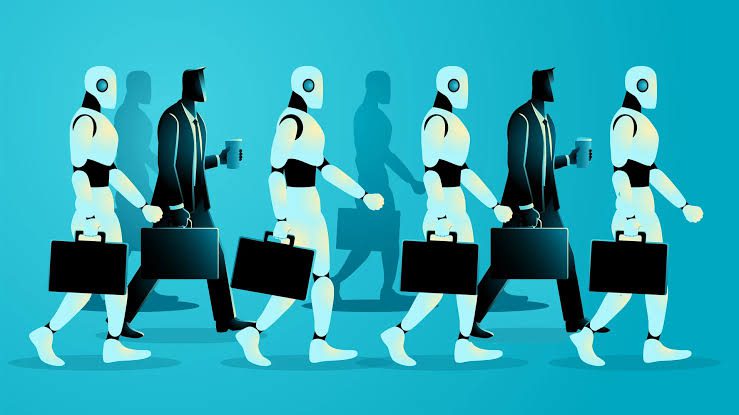
Artificial Intelligence (AI) is reshaping every industry—from healthcare and finance to education, manufacturing, agriculture, cybersecurity, and entertainment. As businesses continue to automate operations and integrate AI into their products and services, the demand for skilled professionals is expected to grow rapidly over the next decade.
Contrary to the belief that AI will replace all human jobs, the technology is creating entirely new career opportunities that did not exist just a few years ago. Companies are looking for professionals who can build AI systems, manage AI-powered products, ensure responsible AI use, protect digital infrastructure, and transform business operations.
Whether you are a student planning your future, a software developer looking to specialize, or a professional considering a career change, understanding the most in-demand AI careers can help you prepare for long-term success.
Why AI Careers Are Growing So Fast
Several trends are driving demand for AI professionals:
- Businesses are automating repetitive tasks.
- AI assistants are improving workplace productivity.
- Companies are investing heavily in machine learning and generative AI.
- Governments are developing AI regulations.
- Cybersecurity threats are becoming more sophisticated.
- Demand for data-driven decision-making continues to increase.
Organizations now need experts who can build, deploy, secure, monitor, and govern AI systems responsibly.
1. AI Engineer
What They Do
AI Engineers design, build, deploy, and maintain artificial intelligence systems that solve real-world business problems.
Typical responsibilities include:
- Building AI-powered applications
- Deploying machine learning models
- Integrating Large Language Models (LLMs)
- Creating intelligent automation systems
- Optimizing AI performance
Essential Skills
- Python
- Machine Learning
- TensorFlow
- PyTorch
- APIs
- Cloud Computing
- Docker
- Git
Industries
- Healthcare
- Finance
- Retail
- Education
- Manufacturing
2. Machine Learning Engineer
Machine Learning Engineers specialize in creating systems that learn from data.
Daily work includes:
- Training predictive models
- Data preprocessing
- Feature engineering
- Model evaluation
- Performance optimization
Popular tools:
- Scikit-learn
- TensorFlow
- PyTorch
- MLflow
3. Data Scientist
Data Scientists transform raw data into valuable business insights.
Responsibilities include:
- Statistical analysis
- Data visualization
- Predictive analytics
- Business intelligence
- AI model development
Important technologies:
- Python
- SQL
- Power BI
- Tableau
- Pandas
4. Prompt Engineer
Generative AI has created demand for professionals who know how to communicate effectively with AI systems.
Prompt Engineers:
- Design effective prompts
- Optimize AI outputs
- Build AI workflows
- Improve chatbot performance
- Test AI reliability
This role combines technical understanding with creativity and business knowledge.
5. AI Product Manager
AI Product Managers bridge the gap between technology and business.
Responsibilities include:
- Product strategy
- Customer research
- Feature planning
- AI integration
- Team coordination
Strong communication and leadership skills are essential.
6. AI Research Scientist
Research Scientists push the boundaries of artificial intelligence.
They work on:
- New AI models
- Deep Learning
- Robotics
- Computer Vision
- Natural Language Processing
Many work in universities, research labs, or leading technology companies.
7. Robotics Engineer
Modern robots increasingly rely on AI.
Robotics Engineers build intelligent systems used in:
- Manufacturing
- Warehousing
- Agriculture
- Healthcare
- Logistics
8. Computer Vision Engineer
Computer Vision enables computers to understand images and video.
Applications include:
- Facial recognition
- Medical imaging
- Autonomous vehicles
- Quality inspection
- Security systems
Key skills:
- OpenCV
- Python
- Deep Learning
- Image Processing
9. Natural Language Processing (NLP) Engineer
NLP Engineers develop systems that understand and generate human language.
Examples include:
- Chatbots
- Virtual assistants
- Translation systems
- Voice assistants
- Search engines
Popular technologies:
- Transformers
- Hugging Face
- spaCy
- NLTK
10. AI Software Developer
AI Software Developers integrate artificial intelligence into web, mobile, desktop, and enterprise applications.
Tasks include:
- API integration
- AI chatbot development
- Recommendation systems
- Workflow automation
- Intelligent search
11. MLOps Engineer
Machine Learning Operations (MLOps) Engineers ensure AI models can be deployed, monitored, updated, and scaled efficiently.
Key responsibilities:
- CI/CD pipelines for ML
- Model monitoring
- Infrastructure automation
- Performance optimization
Common tools:
- Kubernetes
- Docker
- MLflow
- Kubeflow
12. AI Cybersecurity Specialist
AI is transforming cybersecurity by improving threat detection and automated response.
Professionals in this field:
- Detect cyber threats
- Build AI-powered security tools
- Analyze malware
- Prevent fraud
- Monitor networks
13. AI Ethics and Governance Specialist
As AI adoption grows, organizations must ensure AI systems are fair, transparent, secure, and compliant with regulations.
Responsibilities include:
- Bias detection
- Risk assessment
- AI governance frameworks
- Regulatory compliance
- Ethical AI policies
14. AI Business Consultant
Many companies want to adopt AI but lack internal expertise.
AI Consultants help organizations:
- Identify AI opportunities
- Select appropriate technologies
- Improve business processes
- Reduce operational costs
- Train employees
15. AI Solutions Architect
Solutions Architects design enterprise AI systems.
They combine expertise in:
- Cloud Computing
- APIs
- Security
- Databases
- AI platforms
- Enterprise architecture
Skills You Should Learn Today
To prepare for an AI career, focus on these high-value skills:
Programming Languages
- Python
- SQL
- JavaScript
- Java
- C++
AI Frameworks
- TensorFlow
- PyTorch
- Hugging Face
- LangChain
Cloud Platforms
- AWS
- Microsoft Azure
- Google Cloud
Databases
- PostgreSQL
- MySQL
- MongoDB
- Vector Databases
Development Tools
- Git
- Docker
- Kubernetes
- VS Code
- Jupyter Notebook
Soft Skills
- Problem-solving
- Communication
- Teamwork
- Critical thinking
- Business understanding
- Continuous learning
Which Career Fits You?
| Career Goal | Recommended AI Job |
|---|---|
| Love Coding | AI Engineer |
| Love Mathematics | Machine Learning Engineer |
| Enjoy Statistics | Data Scientist |
| Creative Thinker | Prompt Engineer |
| Leadership | AI Product Manager |
| Research | AI Research Scientist |
| Hardware & Automation | Robotics Engineer |
| Images & Video | Computer Vision Engineer |
| Languages & Chatbots | NLP Engineer |
| Cloud & Deployment | MLOps Engineer |
| Business Strategy | AI Consultant |
| Security | AI Cybersecurity Specialist |
| Compliance & Risk | AI Ethics Specialist |
How to Start an AI Career
If you’re just beginning, follow this roadmap:
Step 1: Learn Python programming.
Step 2: Understand data structures, algorithms, and SQL.
Step 3: Study mathematics, including linear algebra, probability, and statistics.
Step 4: Learn machine learning fundamentals.
Step 5: Build projects such as chatbots, recommendation systems, image classifiers, or predictive models.
Step 6: Create a GitHub portfolio showcasing your work.
Step 7: Earn relevant certifications and contribute to open-source projects.
Step 8: Stay updated with the latest AI tools, research papers, and industry trends.
The Future of AI Careers
Over the next decade, AI will become deeply integrated into nearly every profession. Rather than replacing skilled workers entirely, AI is expected to automate repetitive tasks while increasing demand for professionals who can design, manage, improve, and govern intelligent systems.
The most successful professionals will combine technical expertise with business knowledge, creativity, communication skills, and a commitment to lifelong learning.
Final Thoughts
Artificial Intelligence is creating one of the biggest employment transformations in modern history. From AI Engineers and Data Scientists to MLOps Engineers, AI Product Managers, Cybersecurity Specialists, and Ethics Experts, opportunities are expanding across every sector of the economy.
The best time to start preparing is now. Build strong programming skills, master AI fundamentals, create practical projects, and continue learning as the technology evolves. Those who invest in AI skills today will be well-positioned to thrive in the job market of 2036 and beyond.
Published by Izow Technology
Follow Izow Technology for expert tutorials, AI career guides, programming resources, cybersecurity insights, software reviews, and the latest technology trends shaping the future.